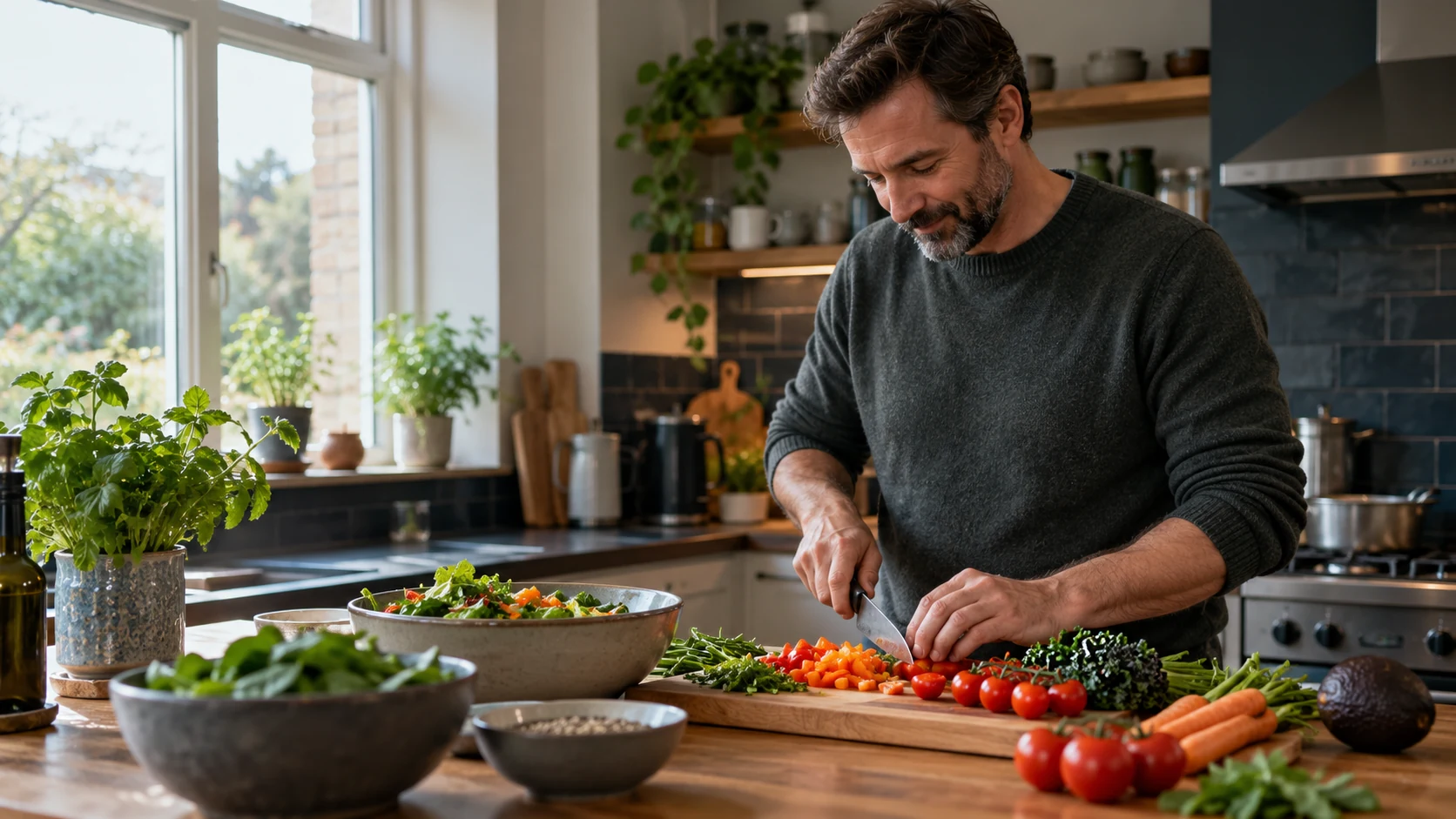
Build ordinary meals around variety, enjoyment and flexible routines. A useful approach begins by recognising that the best decisions are often shaped by ordinary realities, not ideal conditions.
Begin with everyday food
Balanced eating does not need a dramatic reset. It may begin with considering what you normally eat at breakfast, lunch and dinner, and how those meals fit into your day. A varied pattern can include vegetables and fruit, starchy foods, sources of protein, and fats in appropriate amounts. Enjoyment and practicality matter too. Food is not only fuel; it is linked to culture, budgets, family life and shared experiences.
Make meals easier to repeat
A few adaptable combinations can remove some of the pressure of planning. Think of a lunchtime sandwich with vegetables and a piece of fruit, a warm meal built around grains and seasonal ingredients, or leftovers made into another simple dish. There is no requirement for every meal to look identical or for cooking to become a major project. Preparing one useful ingredient ahead of time may be enough to help on a busy day.
Notice the environment around eating
Meals often happen between meetings, commutes and other demands. When possible, giving yourself enough time to eat and drink can make the day more manageable. Keep water within reach and consider whether long gaps between meals make your schedule harder to navigate. Access, affordability and individual dietary needs vary, so suggestions should remain adaptable. Restrictive rules and guilt rarely make food more enjoyable.
Balance also includes flexibility
Celebrations, travel, takeaway meals and changing circumstances belong in real life. One meal does not need to represent your entire approach to wellbeing. Instead of labelling foods as moral successes or failures, think about variety across the week. Many people benefit from having a few reliable meals they like while remaining free to eat differently when the situation calls for it.
Ask questions when needs are specific
People managing allergies, a medical condition or complex nutritional requirements may need tailored help from a suitably qualified professional. General food articles cannot account for every circumstance. For everyday choices, a calm starting point is enough: find a workable meal rhythm, include variety, remain curious about what you enjoy and make room for the social pleasure of eating together.
Keep ordinary constraints visible
A nutrition idea is more useful when it respects the realities of shopping, cooking and eating. If time is short, frozen or tinned ingredients can be practical. If a full recipe is too much, a familiar combination of foods may serve you well. Think about personal preferences and the people you eat with, not only an abstract picture of a balanced plate. An enjoyable, repeatable meal can be an important part of a calmer relationship with food, even when it looks modest.
Take the idea into your own day.
Choose one part of this subject that feels relevant, and give yourself permission to explore it at a sensible pace. Wellbeing remains a conversation worth returning to as life changes.